

Hey there! As a supplier of self-priming sump pumps, I often get asked about the starting time of these nifty devices. So, I thought I'd take a few minutes to break it down for you.
First off, let's talk about what a self-priming sump pump is. In simple terms, it's a pump that can prime itself, meaning it can remove air from the suction line and start pumping water without the need for external priming. This makes them super convenient, especially in applications where the water source might not be constantly flooded or where you need to quickly start pumping.
Now, the starting time of a self-priming sump pump can vary quite a bit depending on several factors. One of the most important factors is the design of the pump itself. Different pumps have different priming mechanisms, and some are just faster at getting up and running than others.
For example, some self-priming sump pumps use a built-in check valve to prevent water from flowing back out of the suction line when the pump stops. This helps to keep the pump primed and can reduce the starting time. Other pumps might have a larger priming chamber or a more efficient impeller design, which can also speed up the priming process.
Another factor that can affect the starting time is the condition of the pump and the suction line. If the pump is clogged or the suction line is blocked, it can take longer for the pump to prime. That's why it's important to regularly maintain your pump and make sure the suction line is clear of debris.
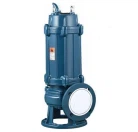

The type of water you're pumping can also play a role. If the water is thick or contains a lot of solids, it can be more difficult for the pump to prime. In these cases, you might need to use a pump with a larger impeller or a more powerful motor to get the job done.
The height of the water source relative to the pump is another consideration. If the water level is too low, the pump might have to work harder to prime. This is because the pump needs to create a vacuum in the suction line to draw the water up. If the water level is too far below the pump, it can take longer for the pump to create that vacuum.
So, what's a typical starting time for a self-priming sump pump? Well, it really depends on the factors I mentioned above. In general, a well-designed and properly maintained self-priming sump pump should be able to prime within a few minutes. However, in some cases, it might take up to 10 or 15 minutes, especially if the conditions are less than ideal.
If you're in the market for a self-priming sump pump, it's important to do your research and choose a pump that's right for your needs. At our company, we offer a wide range of self-priming sump pumps, including Upright Non-Clogging Sewage Pump, Self-Priming Sewage Pump, and Pipeline Non-Clogging Sewage Pump. Our pumps are designed to be reliable, efficient, and easy to use, and we can help you find the perfect pump for your application.
If you have any questions about self-priming sump pumps or need help choosing the right pump for your needs, don't hesitate to reach out to us. We're here to help you make the best decision for your pumping needs. Whether you're a homeowner looking to keep your basement dry or a commercial user in need of a heavy-duty pumping solution, we've got you covered.
In conclusion, the starting time of a self-priming sump pump can vary depending on several factors, but with the right pump and proper maintenance, you can expect it to prime relatively quickly. If you're interested in learning more about our self-priming sump pumps or would like to discuss your pumping needs, please contact us. We look forward to hearing from you and helping you find the perfect pumping solution.
References
- Various industry manuals and guides on self-priming sump pumps.
- Technical specifications provided by pump manufacturers.