

In the industrial and municipal sectors, diaphragm sewage pumps are widely used due to their unique advantages, such as the ability to handle viscous and abrasive fluids, and their self - priming capabilities. As a diaphragm sewage pump supplier, I understand the importance of pump efficiency for our customers. Improving the efficiency of a diaphragm sewage pump not only reduces energy consumption but also enhances the overall performance of the pumping system. In this blog, I will share some practical methods to improve the efficiency of diaphragm sewage pumps.
1. Select the Right Pump Model
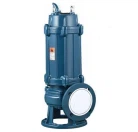
The first step in improving pump efficiency is to choose the appropriate pump model for the specific application. Different applications have different requirements in terms of flow rate, head, and the nature of the sewage being pumped. For example, if you need to pump sewage with large solid particles, an Upright Non - Clogging Sewage Pump might be a better choice. This type of pump is designed to prevent clogging and can handle solid - laden sewage more effectively.
When selecting a pump, it is crucial to accurately assess the flow rate and head requirements. An oversized pump will consume more energy than necessary, while an undersized pump will not be able to meet the operational needs, leading to inefficiencies. You should also consider the characteristics of the sewage, such as its viscosity, density, and the presence of abrasive particles. For highly viscous sewage, a pump with a larger diaphragm and a more powerful motor may be required.
2. Optimize the Pump Installation
Proper installation is essential for the efficient operation of a diaphragm sewage pump. The pump should be installed on a stable and level foundation to prevent vibration and misalignment. Vibration can cause premature wear of the pump components and reduce its efficiency.
The suction and discharge pipelines should be carefully designed and installed. The suction pipeline should be as short as possible and have a large enough diameter to minimize frictional losses. A long or narrow suction pipeline can create excessive suction resistance, which will reduce the pump's flow rate and efficiency. Additionally, the suction pipeline should be free of air leaks, as air in the pipeline can cause cavitation, a phenomenon that can damage the pump and reduce its performance.
The discharge pipeline should also be properly sized to match the pump's flow rate. A pipeline that is too small will increase the pressure loss, while a pipeline that is too large may result in a lower flow velocity, which can lead to sedimentation and clogging.
3. Maintain the Pump Regularly
Regular maintenance is key to ensuring the long - term efficiency of a diaphragm sewage pump. The pump components, such as the diaphragms, valves, and seals, should be inspected and replaced periodically. Worn - out diaphragms can cause leaks and reduce the pump's volumetric efficiency. Valves that do not close properly can lead to backflow, which will also decrease the pump's performance.
The pump should be cleaned regularly to remove any debris or sediment that may accumulate inside the pump. This is especially important for sewage pumps, as the presence of solid particles can cause abrasion and clogging. The lubrication system, if applicable, should be checked and refilled as needed to ensure smooth operation of the moving parts.
4. Control the Pump Operation
Proper control of the pump operation can significantly improve its efficiency. One way to do this is by using a variable - speed drive (VSD). A VSD allows the pump to adjust its speed according to the actual flow rate and head requirements. This means that the pump can operate at the most efficient point on its performance curve, reducing energy consumption.
For example, during periods of low demand, the pump can run at a lower speed, consuming less power. When the demand increases, the pump can increase its speed to meet the requirements. This not only saves energy but also extends the lifespan of the pump components.
Another important aspect of pump operation control is to avoid frequent starts and stops. Each time a pump starts, it requires a large amount of energy. Frequent starts and stops can also cause mechanical stress on the pump components, leading to premature wear. Therefore, it is advisable to use a control system that can maintain a relatively stable pump operation.
5. Upgrade the Pump Components
In some cases, upgrading the pump components can improve the efficiency of a diaphragm sewage pump. For example, replacing the old diaphragms with high - performance ones can increase the pump's volumetric efficiency. Newer diaphragm materials are often more durable and have better sealing properties, which can reduce leakage and improve the pump's overall performance.
Upgrading the valves can also enhance the pump's efficiency. High - quality valves can open and close more precisely, reducing backflow and improving the pump's flow rate. Additionally, upgrading the motor to a more energy - efficient model can significantly reduce the pump's energy consumption.
6. Monitor the Pump Performance
Continuous monitoring of the pump performance is essential for identifying and addressing any efficiency issues promptly. You can use various monitoring tools, such as flow meters, pressure gauges, and power meters, to measure the pump's flow rate, head, and power consumption. By regularly collecting and analyzing these data, you can detect any changes in the pump's performance and take appropriate measures to correct them.
For example, if you notice a decrease in the flow rate or an increase in the power consumption, it may indicate a problem with the pump components or the pipeline. By investigating the cause and taking corrective actions, such as replacing a worn - out diaphragm or cleaning the pipeline, you can restore the pump's efficiency.
7. Train the Operators
Well - trained operators are crucial for the efficient operation of diaphragm sewage pumps. Operators should be familiar with the pump's operating principles, maintenance requirements, and safety procedures. They should also be able to recognize the signs of pump inefficiencies, such as abnormal noise or vibration, and take appropriate actions.
Training programs should include theoretical knowledge and practical hands - on training. Operators should learn how to operate the pump correctly, how to perform basic maintenance tasks, and how to troubleshoot common problems. By improving the operators' skills and knowledge, you can ensure that the pump is operated and maintained in the most efficient way possible.

In conclusion, improving the efficiency of a diaphragm sewage pump requires a comprehensive approach that includes proper pump selection, installation, maintenance, operation control, component upgrade, performance monitoring, and operator training. As a diaphragm sewage pump supplier, we are committed to providing our customers with high - quality pumps and professional technical support to help them achieve the best possible pump efficiency.
If you are interested in our diaphragm sewage pumps or have any questions about improving pump efficiency, please feel free to contact us for further discussions and procurement negotiations. We look forward to working with you to meet your sewage pumping needs.
References
- Simpson, L. (2018). Pump Handbook. McGraw - Hill Professional.
- Karassik, I. J., et al. (2008). Pump Handbook (4th ed.). McGraw - Hill.
- Hydraulic Institute. (2012). ANSI/HI 1.1 - 1.2 Rotodynamic Pumps - Design and Application.