

Hey there! As a supplier of non-clogging pumps, I've dealt with all sorts of questions about these bad boys. One of the most common ones is how to adjust the flow rate of a non-clogging pump. So, I thought I'd share some tips and tricks with you based on my experience in the field.
First off, let's talk about why you might want to adjust the flow rate. There are a bunch of reasons. Maybe you're trying to match the pump's output to the requirements of your system. For example, if you're using the pump to move wastewater in a sewage treatment plant, you need to make sure the flow rate is just right to keep the treatment process running smoothly. Or perhaps you're dealing with a change in the load or the characteristics of the fluid you're pumping. Maybe the viscosity of the liquid has increased, and you need to adjust the flow rate to maintain efficiency.
Now, let's get into the nitty-gritty of how to actually adjust the flow rate. There are a few different methods, and which one you choose depends on the type of non-clogging pump you have and the specific situation you're in.
Method 1: Using a Throttle Valve
One of the simplest ways to adjust the flow rate is by using a throttle valve. This is basically a valve that you can open or close to control the amount of fluid that passes through the pump. It's kind of like turning the faucet on your sink to control the flow of water.
To use a throttle valve, you'll need to install it in the discharge line of the pump. Once it's installed, you can adjust the valve to increase or decrease the flow rate. If you want to increase the flow rate, you open the valve wider. If you want to decrease it, you close the valve a bit.
However, there are a few things to keep in mind when using a throttle valve. First, closing the valve too much can cause the pressure in the pump to increase, which can lead to damage. So, you need to be careful not to overdo it. Second, using a throttle valve can reduce the efficiency of the pump, especially if you're closing it a lot. This is because the pump has to work harder to push the fluid through the partially closed valve.
Method 2: Changing the Pump Speed
Another way to adjust the flow rate is by changing the speed of the pump. Most non-clogging pumps are driven by an electric motor, and you can adjust the speed of the motor to change the speed of the pump.
There are a few different ways to change the pump speed. One way is to use a variable frequency drive (VFD). A VFD is a device that allows you to control the speed of the electric motor by changing the frequency of the electrical power supplied to it. By adjusting the frequency, you can increase or decrease the speed of the motor, which in turn changes the flow rate of the pump.
Changing the pump speed is a more efficient way to adjust the flow rate compared to using a throttle valve. This is because the pump is operating at a speed that is more closely matched to the required flow rate, so it doesn't have to work as hard. However, a VFD can be expensive to install, so it might not be the best option for everyone.
Method 3: Changing the Impeller Diameter
If you're looking for a more permanent way to adjust the flow rate, you can consider changing the impeller diameter of the pump. The impeller is the part of the pump that actually moves the fluid. By changing the diameter of the impeller, you can change the amount of fluid that the pump can move.
To change the impeller diameter, you'll need to remove the pump and replace the impeller with one that has a different diameter. This is a more complex and time-consuming process compared to the other methods, and it might require the help of a professional.

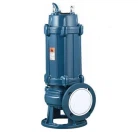
Changing the impeller diameter can be a good option if you need to make a significant change to the flow rate and you don't want to rely on a throttle valve or a VFD. However, it's important to make sure that the new impeller is compatible with the pump and that it's installed correctly.
Types of Non-Clogging Pumps
As a non-clogging pump supplier, I offer a variety of different types of non-clogging pumps, each with its own unique features and applications. Here are a few of the most popular types:
- Upright Non-Clogging Sewage Pump: This type of pump is designed to handle sewage and other wastewater. It's upright in design, which makes it easy to install and maintain. It's also highly efficient and can handle a wide range of flow rates.
- Pipeline Non-Clogging Sewage Pump: This pump is specifically designed for use in pipelines. It's compact and can be easily installed in a pipeline system. It's also very reliable and can handle a variety of different fluids.
- Self-Priming Sewage Pump: This type of pump is great for applications where the pump needs to be able to prime itself. It can handle sewage and other wastewater, and it's easy to operate.
Conclusion
Adjusting the flow rate of a non-clogging pump is an important part of ensuring that your pumping system is working efficiently and effectively. Whether you choose to use a throttle valve, change the pump speed, or change the impeller diameter, it's important to understand the pros and cons of each method and to choose the one that's right for your specific situation.
If you're in the market for a non-clogging pump or you need help adjusting the flow rate of your existing pump, don't hesitate to reach out. I'm here to help you find the best solution for your needs. Contact me to start a procurement discussion and let's work together to get your pumping system running smoothly.
References
- "Pump Handbook" by Igor Karassik et al.
- "Centrifugal Pumps: Design and Application" by Heinz P. Bloch and Allan R. Budris.