

As a supplier of Self-Priming Sewage Pumps, one question I often encounter from customers is, "Can a self-priming sewage pump be installed horizontally?" This is a crucial query, as the correct installation orientation can significantly impact the pump's performance and longevity. In this blog, I'll delve into the technical aspects of self-priming sewage pumps and explore whether horizontal installation is a viable option.
Understanding Self-Priming Sewage Pumps
Before we discuss the installation orientation, let's first understand what a self-priming sewage pump is. A Self-Priming Sewage Pump is designed to handle wastewater that contains solid particles, such as sewage, sludge, and industrial waste. These pumps are equipped with a self-priming mechanism, which allows them to remove air from the suction line and start pumping liquid without the need for external priming.
The self-priming process is essential for sewage pumps, as it enables them to operate efficiently even when the pump is located above the liquid level. This feature makes self-priming sewage pumps ideal for applications where the liquid source is below the pump, such as in basements, septic tanks, and sewage lift stations.
Factors Affecting Horizontal Installation
Now, let's examine the factors that determine whether a self-priming sewage pump can be installed horizontally.
1. Pump Design
The design of the pump plays a crucial role in determining its suitability for horizontal installation. Some self-priming sewage pumps are specifically designed for horizontal installation, while others are intended for vertical installation only.

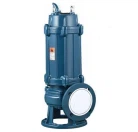
Pumps designed for horizontal installation typically have a different impeller design and a more robust housing to withstand the forces exerted during horizontal operation. These pumps are also equipped with a self-priming chamber that is optimized for horizontal orientation, ensuring efficient air removal and priming.
2. Priming Mechanism
The priming mechanism of the pump is another important factor to consider. Some self-priming sewage pumps use a mechanical seal to prevent air from entering the pump during the priming process. In horizontal installation, the mechanical seal may be subjected to additional stress, which can lead to premature wear and failure.
Other pumps use a dynamic priming mechanism, which relies on the rotation of the impeller to create a vacuum and remove air from the suction line. These pumps are generally more suitable for horizontal installation, as the dynamic priming mechanism is less affected by the orientation of the pump.
3. Suction Line Configuration
The configuration of the suction line is also critical for horizontal installation. The suction line should be as short and straight as possible to minimize friction losses and ensure efficient priming. Additionally, the suction line should be installed at a slight upward slope to prevent air from accumulating in the line.
If the suction line is too long or has too many bends, it can impede the flow of air and liquid, making it difficult for the pump to prime. In some cases, it may be necessary to install a check valve in the suction line to prevent backflow and ensure proper priming.
Advantages of Horizontal Installation
Despite the challenges, there are several advantages to installing a self-priming sewage pump horizontally.
1. Space Saving
Horizontal installation requires less vertical space compared to vertical installation. This makes it ideal for applications where space is limited, such as in small basements or mechanical rooms.
2. Easier Maintenance
Horizontal installation allows for easier access to the pump for maintenance and repair. The pump can be easily removed from the installation site without the need for special lifting equipment, making it more convenient for technicians to perform routine maintenance tasks.
3. Reduced Noise and Vibration
Horizontal installation can help reduce noise and vibration levels compared to vertical installation. The pump is more stable in a horizontal position, which reduces the amount of vibration transmitted to the surrounding environment. This can be particularly beneficial in residential or commercial applications where noise is a concern.
Disadvantages of Horizontal Installation
While there are advantages to horizontal installation, there are also some disadvantages that need to be considered.
1. Priming Challenges
As mentioned earlier, horizontal installation can pose challenges to the priming process. The orientation of the pump can affect the efficiency of the self-priming mechanism, making it more difficult for the pump to remove air from the suction line. This can result in longer priming times and reduced pump performance.
2. Impeller Wear
In horizontal installation, the impeller may be subjected to uneven wear due to the force of gravity. The impeller may wear more quickly on one side, which can lead to reduced pump efficiency and increased maintenance costs.
3. Risk of Cavitation
Cavitation is a phenomenon that occurs when the pressure in the pump drops below the vapor pressure of the liquid, causing the formation of vapor bubbles. In horizontal installation, the risk of cavitation may be higher due to the longer suction line and the potential for air to accumulate in the line. Cavitation can cause damage to the impeller and other pump components, reducing the pump's lifespan and performance.
Conclusion
In conclusion, whether a self-priming sewage pump can be installed horizontally depends on several factors, including the pump design, priming mechanism, and suction line configuration. While horizontal installation offers some advantages, such as space saving and easier maintenance, it also poses some challenges, such as priming difficulties and increased risk of impeller wear and cavitation.
As a supplier of Self-Priming Sewage Pumps, we recommend consulting with a qualified engineer or pump specialist before installing a self-priming sewage pump horizontally. They can assess your specific application requirements and recommend the most suitable pump and installation method to ensure optimal performance and reliability.
If you're in the market for a self-priming sewage pump or have any questions about horizontal installation, please don't hesitate to contact us. Our team of experts is available to provide you with personalized advice and assistance to help you choose the right pump for your needs. We also offer a wide range of other sewage pumps, including Pipeline Non-Clogging Sewage Pump and Upright Non-Clogging Sewage Pump, to meet your specific requirements.
References
- Pump Handbook, Karassik, I. J., Messina, J. P., Cooper, P. W., & Heald, C. C. (2008).
- Sewage Pump Installation and Maintenance Guide, Xylem Inc.
- Self-Priming Pumps: Theory and Application, Goulds Pumps.